In-Vitro Caspase 3 Activity Assay

Biology | Toxicology | Biochemistry | Proteomics | Pharmacology
Try Now

As Featured In

Millions of Users. Better Learning. Lower Costs

icon

2.5M+

Active Users Worldwide

icon

80%

Improved Learning Retention

icon

60%

Reduction in Laboratory Costs

General Aim

The caspase 3 activity assay experiment aims at detecting apoptotic cells through visualizing the activity of caspase 3 enzymes inside cellular nuclei using a fluorescent microscope.

Method of Caspase 3 Activity Assay

In Vitro detection of Caspase 3/7 Activity using Fluorescence Microscope.

Learning Objectives (ILOs)

  • By the end of caspase 3 activity assay experiment, the postgraduate student will be able to:
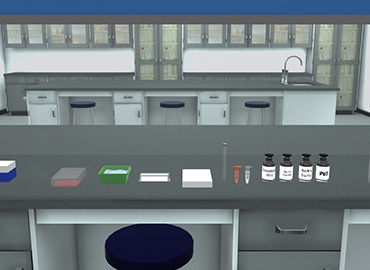
  • Successfully handle the required instruments and consumables needed in the experiment, following caspase 3 activity assay protocol.
  • Check the confluence and count cells under the microscope.
  • Dilute the cells to a specific count suitable for seeding in the 96-well plate.
  • Calculate the concentration of tested chemlabellednd prepares the calculated doses in the cell culture medium.
  • Treat cells with the cytotoxic agent(s) or nanoparticles and observe under the microscope.
  • Treat cells with the caspase 3 primary and secondary antibodies.
  • Analyze cells by fluorescent microscope and analyze resulting data in the caspase 3 activity assay experiment.
  • Represent and interpret the resulting data graphically through caspase 3 activity assay.

Theoretical Background / Context

  • Cytotoxicity is the quality of being toxic to cells. Cytotoxicity assays are widely uIn-Vitrohe pharmaceutical industry to screen for cytotoxicity in compound libraries. 
  • Researchers, as in Nanotechnology, can either look for cytotoxic nano-based materials, if they are interested in developing a nanomedicine that targets rapidly dividing cancer cells, for instance; or they can screen "hits" from initial high-throughput nanoparticle screens for unwanted cytotoxic effects before investing in their development as a nanomedicine. 
  • Assessing cell membrane integrity is one of the most common ways to measure cell viability and cytotoxic effects. 
  • Compounds that have cytotoxic effects often compromise cell membrane integrity. 
  • Vital dyes, such as trypan blue or propidium iodide are normally excluded from the inside of healthy cells; however, if the cell membrane has been compromised, they freely cross the membrane and stain intracellular components. 
  • Alternatively, membrane integrity can be assessed by monitoring the passage of substances that are normally sequestered inside cells to the outside. 
  • Protease biomarkers have been identified that allow researchers to measure relative numbers of live and dead cells within the same cell population. 
  • The live-cell protease is only active in cells that have a healthy cell membrane and loses activity once the cell is compromised and the protease is exposed to the external environment. 
  • The dead-cell protease cannot cross the cell membrane and can only be measured in culture media after cells have lost their membrane integrity. 
  • Cytotoxicity can also be monitored by measuring the reducing potential of the cells using a colourimetric reaction, or using ATP content as a marker of viability. 
  • Such ATP-based assays include bioluminescent assays in which ATP is the limiting reagent for the luciferase reaction. 
  • A label-free approach to follow the cytotoxic response of adherent animal cells in real-time provides the kinetics of the cytotoxic response rather than just a snapshot like many colourimetric endpoint assays, representing one of several apoptosis detection methods.

Principle of Work

  • Mammalian caspases, 14 members discovered to date, play distinct roles in apoptosis and inflammation. 
  • Specifically, caspase 3 is a major mediator of both apoptotic and necrotic cell death. 
  • Caspases are synthesized as inactive precursors or zymogens, which are activated by proteolytic cleavage to generate active enzymes that then proteolytically cleave other caspases or cellular proteins through the caspase cascade in apoptosis.
  • Active caspase-9 cleaves procaspase-3, which then is required for many of the characteristic apoptotic nuclear changes. 
  • Downstream effector caspases, such as caspase-3, cleave and inactivate proteins crucial for the maintenance of cellular cytoskeleton, DNA repair, signal transduction, and cell-cycle control. 
  • There are over 300 in vivo caspase substrates; among them are poly (ADP-ribose) polymerase (PARP-1), where its cleavage results in the liberation of a caspase-activated deoxyribonuclease (CAD) that is responsible for the DNA fragmentation that is characteristic to most apoptotic cells. 
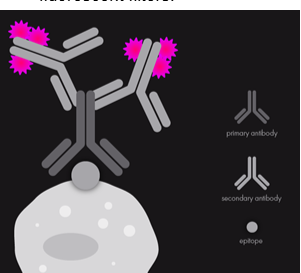
  • Caspase-3 can be detected immunofluorescence by using anti-active caspase-3 antibodies after fixation, permealization, and blocking of fixed cells. 
  • Conjugated secondary antibodies with fluorophores bind to primary anti-caspase 3 antibodies and could be excited under the fluorescent microscope using suitable fluorescent filters.


Trusted by Leading Universities & Institutions


What Professors Are Saying

Start the Way That Works Best for Your Institution

Start Free Trial
Schedule Personalized Demo
Get Pricing Details

Globally Recognized for Transforming STEM Education

Discover More Virtual Labs to Power Your Curriculum

Tailored Licensing to Fit Your Course, Faculty, or Whole Institution